Table of Contents
In the modern industrial landscape, the transport of fluids is a fundamental process that underpins nearly every sector of the global economy. From the massive cooling systems of power plants and the intricate chemical dosing lines of pharmaceutical labs to the critical wastewater management systems of mega-cities, the pump is the “heart” of the industrial body.
FLOWTECH CHINA, the premier international trade platform for pump and valve technology, they have analyzed the current market demands and the technical evolution of fluid handling. Selecting the right pump is no longer just about moving liquid from Point A to Point B; it is about energy optimization, life-cycle cost management, and system reliability.
This comprehensive guide serves as a technical roadmap for engineers, procurement managers, and distributors to understand the diverse classifications of pumps and their specific industrial applications.
The Fundamental Classification: Understanding the Physics of Fluid Motion
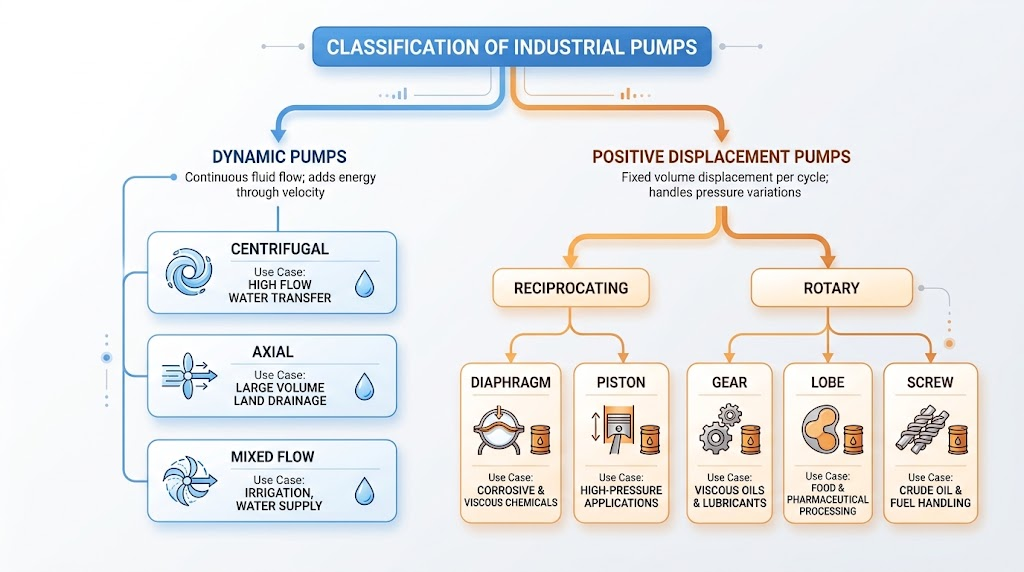
Before diving into specific models, one must understand the two primary physical methods used to move fluid: Kinetic Energy (Dynamic) and Pressure Displacement (Positive Displacement). The choice between these two categories defines the efficiency and longevity of your entire piping network.
Dynamic Pumps (Centrifugal Solutions)
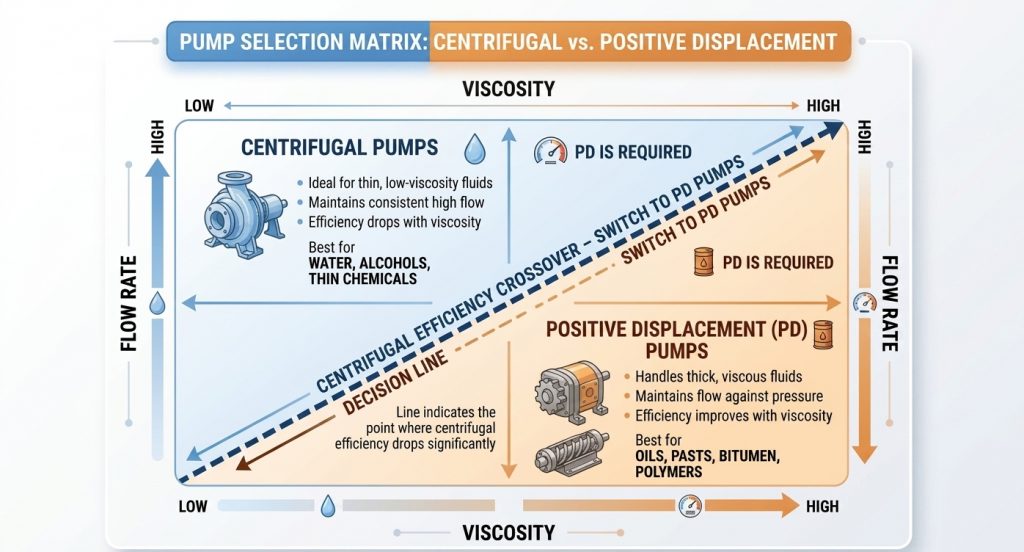
Dynamic pumps impart velocity and pressure to the fluid as it moves through the pump. The most common sub-type is the Centrifugal Pump. These are the workhorses of the global industry due to their mechanical simplicity and ability to handle high flow rates at relatively low viscosities.
The operational logic is based on the centrifugal force generated by a rotating impeller. As fluid enters the “eye” of the impeller, it is accelerated outward into a volute chamber, where its kinetic energy is converted into pressure.
Positive Displacement (PD) Pumps
Unlike dynamic pumps, PD pumps move fluid by trapping a fixed volume and forcing it into the discharge pipe. These are essential when dealing with high-viscosity liquids (like oils, sludge, or food products) or when precise dosing is required. Because they provide a constant flow regardless of the discharge pressure, they are the preferred choice for high-pressure/low-flow applications.
A Deep Dive into Centrifugal Pump Variations
Centrifugal pumps represent approximately 70% of the pumps used in industrial applications worldwide. However, “centrifugal” is a broad term that encompasses several specialized designs found at exhibitions like FLOWTECH CHINA.
End-Suction Pumps
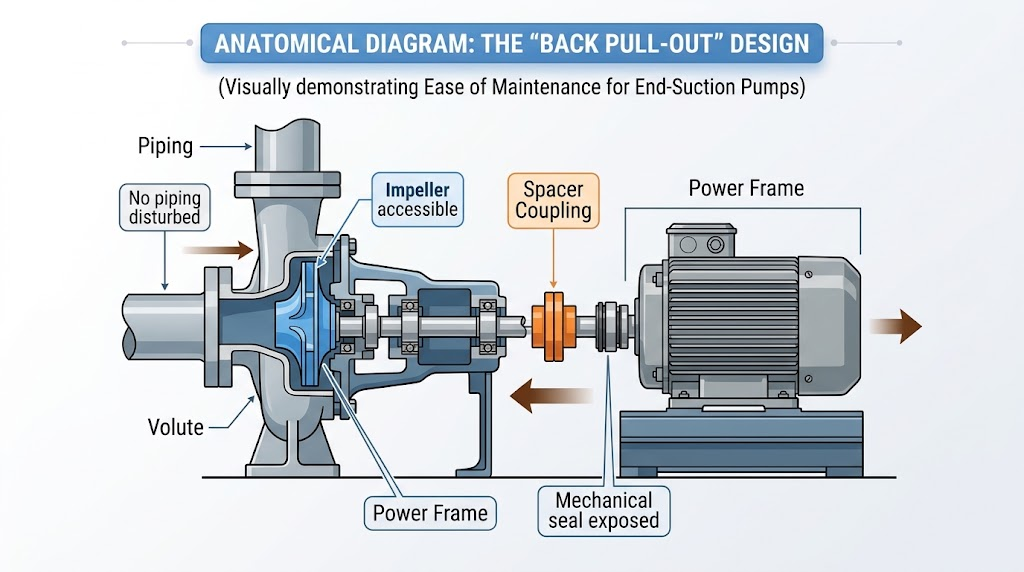
This is the quintessential centrifugal pump. The fluid enters the pump horizontally through the “end” and exits vertically. These are favored for their ease of maintenance; many modern designs feature a “back pull-out” capability, allowing the motor and impeller to be removed for servicing without disturbing the piping.
- Typical Uses: Commercial HVAC systems, water boosting in high-rise buildings, and general-purpose industrial liquid transfer.
Multistage Pumps
When a single impeller cannot generate enough pressure (head) to reach a destination, impellers are stacked in series within a single casing. Each stage increases the pressure of the fluid.
- Typical Uses: Boiler feed water systems, high-pressure cleaning, and reverse osmosis (RO) desalination plants where high membrane pressure is required.
Vertical Turbine and Borehole Pumps
Specifically designed for deep-well applications, these pumps feature a motor located either above ground (vertical turbine) or submerged (borehole). They utilize a long shaft to drive multiple impellers located deep within the water source.
- Typical Uses: Agricultural irrigation, municipal groundwater extraction, and mine dewatering.
Submersible Pumps
These units are engineered to operate while completely immersed in the fluid. The motor is hermetically sealed and often oil-filled to prevent liquid ingress. By being submerged, these pumps eliminate the “suction lift” problem, making them more efficient at moving water from depth.
- Typical Uses: Drainage of construction sites, basement flood protection, and municipal sewage lifting stations.
Specialized Solutions for Challenging Media: Sewage and Slurry
Standard water pumps often fail when faced with solids, debris, or abrasive particles. For these “tough” environments, specialized engineering is required.
Sewage and Effluent Pumps
In wastewater management, pumps must handle “ragging” (clogging from fibrous materials) and solid waste. Industrial sewage pumps often utilize vortex impellers or grinder mechanisms. A vortex impeller creates a whirlpool effect that pulls solids through the pump without them ever touching the impeller blades, drastically reducing wear and clogging.
- Industrial Impact: Essential for municipal treatment plants and industrial facilities that must process process-water before discharge.
Slurry Pumps
In mining and heavy manufacturing, fluids often contain high percentages of abrasive solids. Slurry pumps are built with thickened casings and impellers made of high-chrome alloys or rubber linings.
- Key Consideration: These pumps operate at lower speeds to minimize erosive wear, a topic of significant focus for technical innovators at FLOWTECH CHINA.
The Precision World of Positive Displacement Pumps
When the fluid is too thick for a centrifugal pump, or when the process requires an exact volume of chemical, Positive Displacement pumps are the primary solution.
Rotary Pumps (Gear and Lobe)
Rotary pumps use the meshing of gears or lobes to move fluid. They are excellent for high-viscosity fluids and are “self-priming,” meaning they can evacuate air from the suction line.
- Typical Uses: Moving heavy oils in refineries, chocolate or syrups in food processing, and polymers in chemical plants.
Diaphragm Pumps
These utilize a flexible membrane that reciprocates to create suction and discharge. Because they can be air-operated (AODD pumps), they are inherently explosion-proof and can run dry without damage.
- Typical Uses: Handling corrosive chemicals, paints, and solvents where leakage must be zero.
Critical Infrastructure: Fire Protection Systems
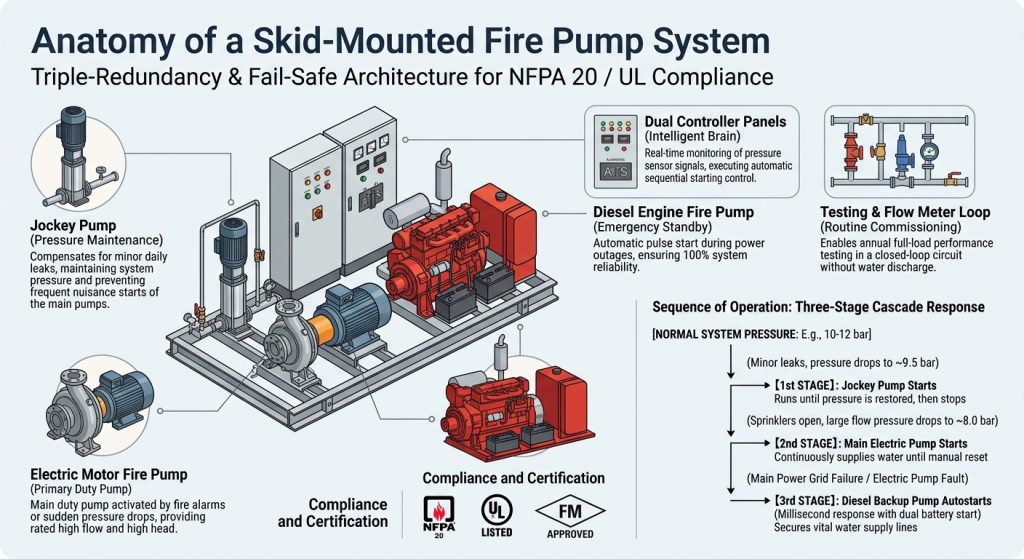
Safety is a non-negotiable sector of the pump industry. Fire hydrant and sprinkler pumps are governed by strict international standards (such as NFPA 20 or UL/FM certification). These systems must remain dormant for years but provide 100% reliability and maximum pressure the moment a fire sensor is triggered.
At FLOWTECH CHINA, we see a growing trend toward integrated Fire Pump Sets—skid-mounted systems that include the main pump (usually centrifugal), a backup diesel-driven pump, and a small “jockey pump” to maintain system pressure.
Technical Engineering Factors: Beyond the Basics
To be a successful overseas buyer or engineer, one must look deeper than the pump type. The performance of any pump is dictated by several critical engineering factors that should be discussed directly with manufacturers.
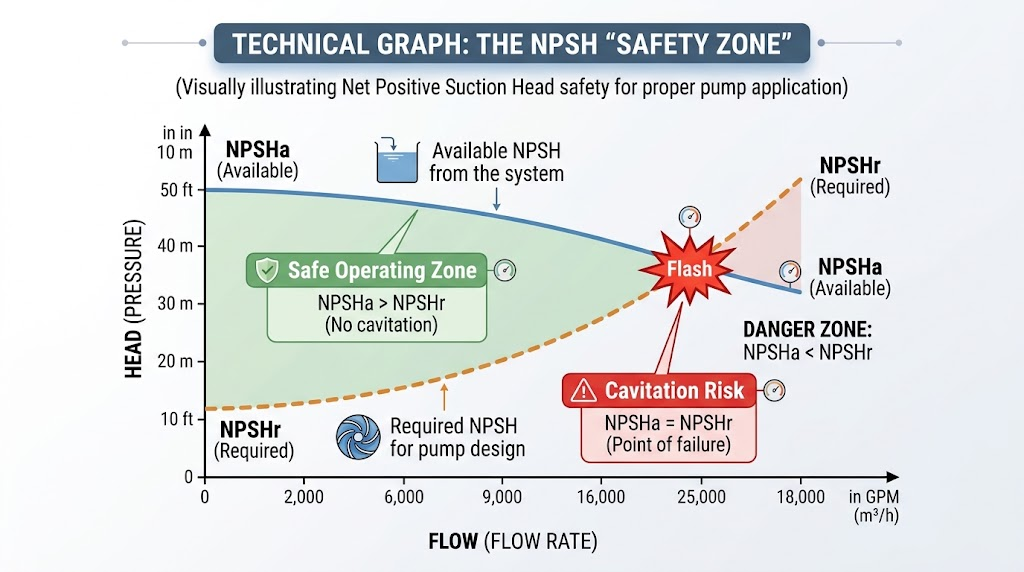
One of the most common causes of pump failure is cavitation. This occurs when the pressure at the pump suction falls below the vapor pressure of the liquid, causing bubbles to form and then collapse violently against the impeller. Understanding the NPSH required (NPSHr) versus the NPSH available (NPSHa) is the difference between a pump that lasts 10 years and one that fails in 10 days.
Materials of Construction (Metallurgy)
The “Standard” cast iron pump is not suitable for seawater or acidic chemicals. The global market is moving toward:
- 316 Stainless Steel: For food grade and mildly corrosive environments.
- Duplex and Super Duplex Steel: For high-pressure desalination and offshore oil & gas.
- Thermoplastics (PVDF/PFA): For ultra-pure chemicals in semiconductor manufacturing.
Mechanical Seals vs. Gland Packing
Modern industrial standards favor mechanical seals to prevent leakage. However, in some mining or primitive agricultural environments, gland packing (which allows for a controlled drip) is still used because it can be repaired in the field without specialized tools.
Global Trends: Sustainability and Industry 4.0
The pump industry is currently undergoing a digital and “green” revolution. As energy prices rise globally, the focus has shifted from the “purchase price” to the “Total Cost of Ownership” (TCO).
Energy Efficiency and VFDs
Pumps account for nearly 25% of the energy consumed by electric motors globally. The integration of Variable Frequency Drives (VFDs) allows a pump to adjust its speed to meet actual demand rather than running at full speed against a throttled valve. This can reduce energy consumption by up to 50%.
Smart Pumping and IoT
The “Internet of Things” has entered the pump room. Modern “Smart Pumps” are equipped with vibration sensors, temperature probes, and flow meters that transmit data to the cloud. This allows for Predictive Maintenance—identifying a bearing failure or a seal leak weeks before it causes a catastrophic system shutdown.
Bridging the Gap: Why FLOWTECH CHINA is Your Strategic Resource
For overseas specialists, staying current with these rapid technological shifts is a challenge. Technical brochures and websites can only convey so much. To truly understand the quality of a manufacturer‘s casting, the precision of their impeller balancing, and the robustness of their control software, one must engage with the hardware and the engineers behind it.
FLOWTECH CHINA is specifically designed to facilitate this global exchange. It is not merely an exhibition; it is the epicenter of the fluid machinery supply chain. For international visitors, it offers an unparalleled opportunity to:
- Source Directly: Connect with over 1,000 high-quality manufacturers, ranging from global giants to specialized boutique engineering firms.
- Compare Technologies: Evaluate Centrifugal vs. PD designs side-by-side to determine the best fit for your specific regional market.
- Ensure Compliance: Meet with experts to discuss international standards (ISO, ANSI, DIN, CE) ensuring that the products you source meet your local regulatory requirements.
- Discover Innovation: Experience the latest in high-efficiency IE4/IE5 motors and AI-driven pump controllers.
The fluid handling industry is evolving, and the decisions made today regarding pump selection will impact operational profitability for decades. Whether you are looking to upgrade a municipal water system or source components for a new chemical processing plant, the solutions are found where the industry converges.